

Rotary drilling rigs are essential equipment in infrastructure construction. During spring and autumn, fluctuating temperatures and increased dust exposure can accelerate wear and reduce equipment efficiency. Proper maintenance is critical to ensuring stable operation and extending service life.
This guide highlights key maintenance practices for the engine, fuel system, transmission, travel mechanisms, and working components—helping your equipment perform reliably in challenging seasonal conditions.
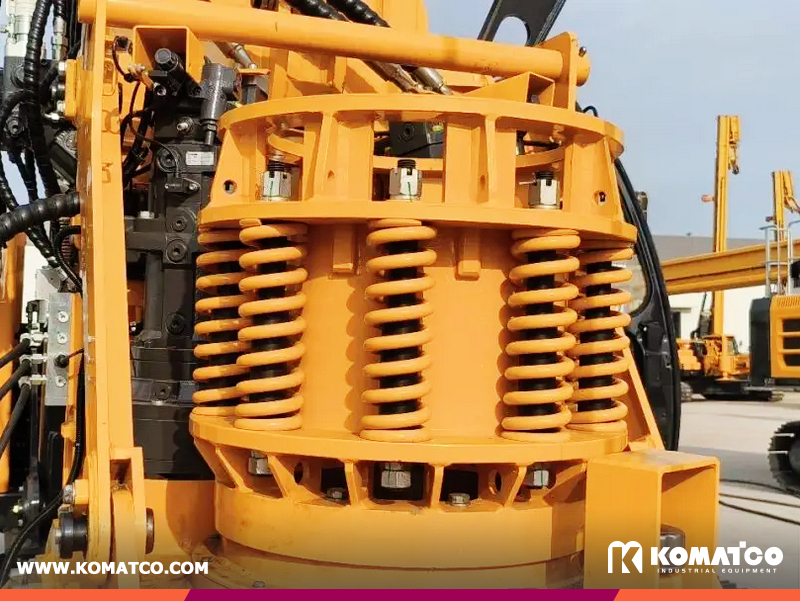
1. Engine & Fuel System (Power Core)
The engine is the heart of the machine, while the fuel system ensures consistent power delivery. Seasonal adjustments and cleanliness are essential to avoid power loss and overheating.
Tips:
- Engine Oil & Filters:
Use 15W-40 oil in spring, and adjust to 10W-30 or 15W-40 in autumn depending on ambient temperature. Replace engine oil and fuel filters regularly.
Check oil level and condition—replace immediately if contamination, emulsification, or unusual odor is detected. - Air Intake & Fuel System:
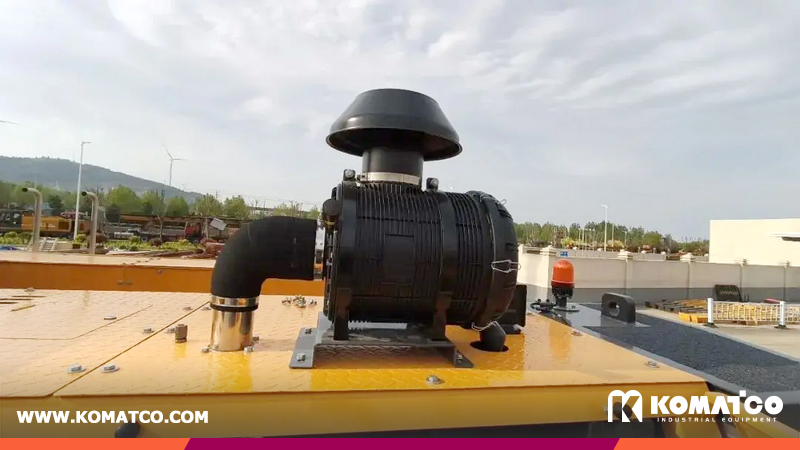
Clean or replace air filters more frequently due to dust and sand.
Drain water and impurities from the fuel tank. Inspect fuel lines and connections to prevent leaks and contamination.
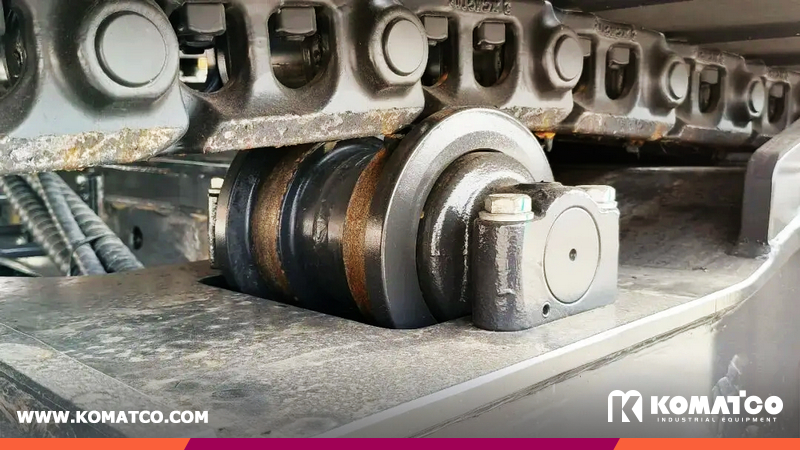
2. Transmission & Travel System
These systems function as the “limbs” of the equipment, requiring proper lubrication, tightening, and inspection to ensure smooth movement and efficient power transmission.
Tips:
- Rotary Drive Gearbox & Reducer:
Replace gear oil after the first 500 hours, then every 2,000 hours or annually (whichever comes first).
Maintain oil level at half of the inspection window and check for leaks.
Inspect gears, bearings, and shafts; clean and lubricate guide rails to prevent jamming. - Travel & Slewing Mechanism:
Adjust track tension properly. Inspect track shoes and rollers for smooth operation.
Replace lubrication oil in travel and slewing reducers.
Check for leaks, abnormal noise, and ensure brake pressure remains within 3–5 MPa for reliable operation.
3. Working Components
Working components are directly exposed to harsh construction conditions and are subject to impact and wear. Regular inspection, cleaning, lubrication, and replacement are essential.
Tips:
- Kelly Bar & Drilling Tools:
Inspect threads, keyways, and welds for cracks, deformation, or excessive wear.
Clean thoroughly and apply grease to prevent corrosion.
Replace worn or damaged teeth and tighten all loose components. - Winch Wire Rope:
Regularly inspect main and auxiliary winch ropes. Replace immediately if excessive wear, broken wires, or corrosion is detected.
Ensure proper rope arrangement on the drum and secure pressing devices.
Lubricate regularly and check brake pads and clutch plates to ensure responsive braking.
-
 Coolant Isn't Just for Winter—Why Excavators Need Antifreeze Year-Round2026-09-21
 -
 Summer Hydraulic Oil Care—Prevent Overheating and Component Wear2026-08-27
 -
 Summer Rain Undercarriage Damage — Why Daily Cleaning Extends Track Life2026-07-21
 -
 AI-Powered Diagnostics Slashes Excavator Repair Time by 60% in Southeast Asia2026-06-18
 -
 Summer Excavator Care Tips to Beat the Heat2026-05-20

Komatco Machinery Limited
 +86-371-5860-5599
  +86-371-5860-5599
 +86-132-1305-6871
+86-132-9836-0959
 export@komatco.com
  Suite 2217, Building D, Jianzheng Oriental Center, No. 100 Shangdu Road, Zhengdong New District, Zhengzhou, Henan Province, China